
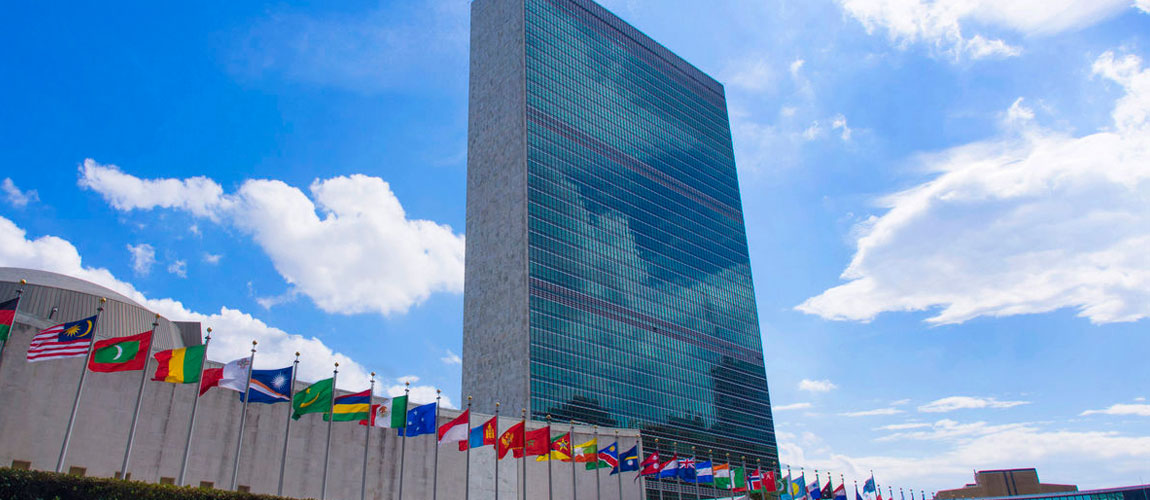
In a letter written on initiative of Mehr News Agency and Tehran Times newspaper, a number of international academia and intellectuals called for removal of structural violence as a basis for true peace.
Following is the full text of the letter:
Dear Secretary-General Guterres
Persian New Year, better known as Norouz, is right around the corner. Celebrated by a few countries around the world, Norouz is the renewal of nature and transition from cold and darkness into light, hope. In other words, the arrival of spring promises rebirth and even whispers of peace.*
Now that the nature’s good tiding is peace, why can’t humans get along and live in peace? What brought humankind to be enemies of others, to lose their true identity and subject them to war.
Aggression and violence have brought nothing but shame to humanity and the international community is responsible for the chaos and carnage. It people choose to wage war, peace will remain a distant goal in the international arena.
A main challenge in international relations is prevention of war. To that end, much has been declared and written, and many organizations, institutes and NGOs have been established by governments to help resolve conflicts in a peaceful manner, but to no avail.
Geographical borders as well as personal, religious, ideological, racial and ethnic boundaries have all been lame excuses for violence. No man, ethnic group or culture is better than another.
We have been witnessing a kind of “structural violence” in international society, for instance, the views and definitions of human rights among countries.
World peace is only realized when structural violence is eliminated. It is achievable not just through ceasefires in wars (negative peace), but rather in the presence of justice for all (positive peace). And even while there may be no firm peace in place, the absence of violence is still an achievement.
The likelihood of civil war and war between states can be minimized or even eliminated when people respect the laws, human rights and fundamental human freedom.
World peace not only does protect man from the shadow of war and its irreparable and heartbreaking aftermath, but allows him to recognize his rights. It is in peacetime that man achieves human dignity which has been frequently addressed in moral, religious and philosophical teachings.
*In a resolution dubbed as the culture of peace in 2010, the United Nations General Assembly proclaimed March 21 as the International Norouz Day that is observed by a few countries across the world: Afghanistan, Albania, Azerbaijan, the Former Yugoslav Republic of Macedonia, India, Iran, Kazakhstan, Kyrgyzstan, Tajikistan, Turkey and Turkmenistan.
Signatories:
1-Prof. Nicholas Onuf, Professor Emeritus of International Relations at Florida International University, editorial boards of International Political Sociology, Cooperation and Conflict, and Contex to Internacional, primary figures among constructivists in international relations
2-Pro.Peter S. Onuf, American history professor, Thomas Jefferson Memorial Foundation Professor of the University of Virginia
3-Prof.Mahmood Monshipouri, University of California Berkeley and San Francisco State University
4- Prof.Charles Taliaferro, American philosopher, Professor and Chair of Philosophy at St. Olaf College
5- Prof. Mehran Kamrava, Professor and Director of the Center for International and Regional Studies at Georgetown University’s School of Foreign Service in Qatar
6- Prof.Charles Butterworth, emeritus professor of political philosophy at the University of Maryland, College Park
7- Prof.Clayton Crockett, University of Central Arkansas, Conway, AR USA
8- Prof.Arshin Adib-Moghaddam, Professor in Global Thought and Comparative Philosophies and Chair of the Centre for Iranian Studies at the London Middle East Institute, SOAS, University of London
9- Prof.Matthew H. Kramer, Professor of Legal and Political Philosophy at the University of Cambridge, Fellow of Churchill College, Cambridge
10- Prof.Nader Entessar, Professor Emeritus of Political Science and Criminal Justice, University of South Alabama
11- Prof.Hossein Askari, George Washington University, former executive Board of the International Monetary Fund, former special advisor to the Minister of Finance of Saudi Arabia
12- Dr. Afshin Shahi, Senior Lecturer in Middle East Politics, Division of Peace Studies & International Development, University of Bradford, Associate editor of British Journal of Middle Eastern Studies
13- Stephen Lendman, anti-racist, humanitarian Jewish American analyst, writer and a Research Associate of the Centre for Research on Globalization
14- Yuram Abdullah Weiler, freelance writer and political critic
15-Prof. Kevin Richards, the Chair of Liberal Arts, and the Low-Residency MFA Program Head, Pennsylvania Academy of the Fine Arts
16-Prof.Stuart Sim, professor of English literature at Northumbria University (School of Arts & Social Sciences)
17-Pro.Scott Davison, Professor of Philosophy, Morehead State University
18-Dr.Dimitris Giannakopoulos, Editor-in-Chief of Modern Diplomacy
19-Prof.Douglas Casson, Associate Professor of Political Science, Director of the Great Conversation Program, St Olaf College
20-Lucia Margaret Wagner, student at St. Olaf College
21-Simon Vincent Patmore-Zarcone, student at St. Olaf College
22- Prof. Chad Meister, Professor of Philosophy, Bethel College
23-Mohammad Ghaderi, editor-in-chief of Tehran Times newspaper
24-Jalal Heirannia, freelance journalist
25- Javad Heirannia (Author of the letter), Expert on Middle East Issues, Head of international desk of Mehr News Agency